The Ottoman turning point — and why 'the Muslim world' is a British invention
The phrase ‘the Muslim world’ is a fiction; a convenient shorthand for a post-Ottoman fracture the West found it useful to lump together. Tracing that colonial flattening is the first honest step toward not misreading a quarter of the planet.
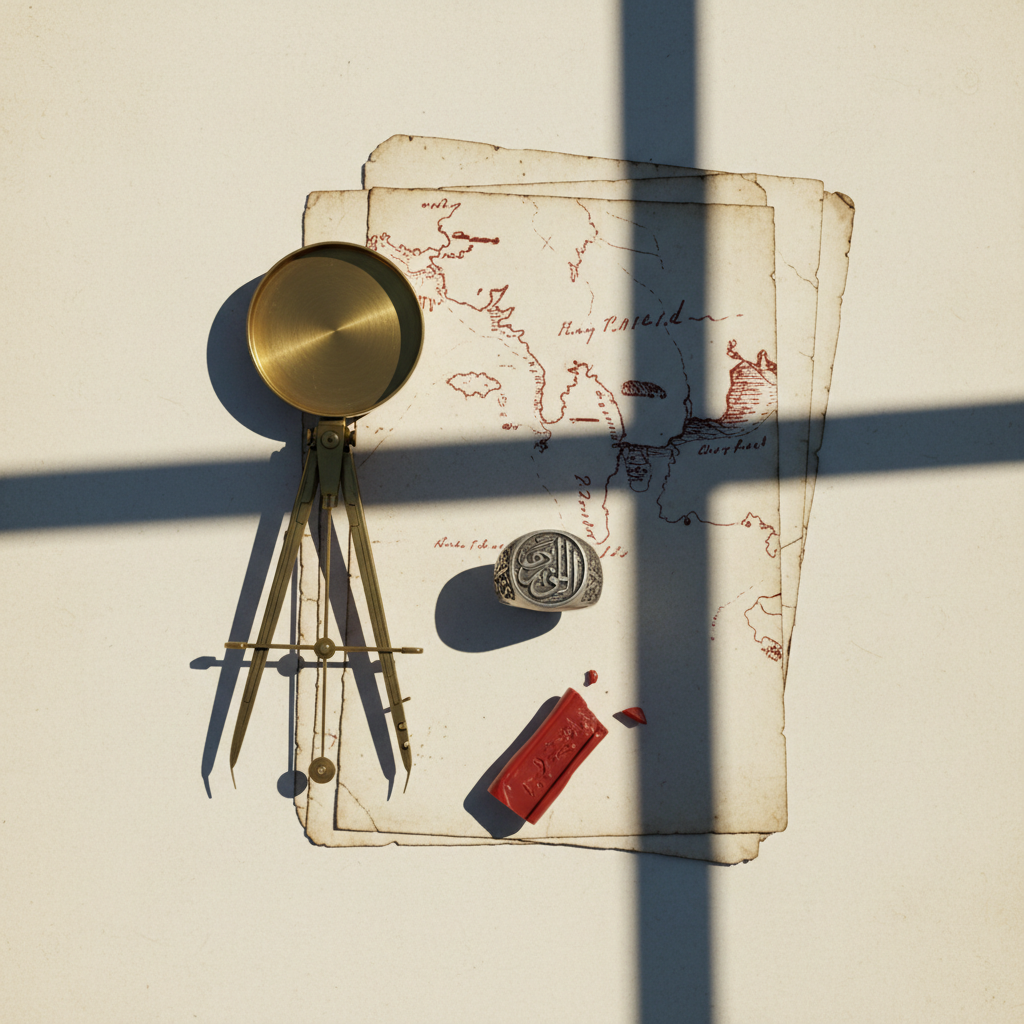
'''The term ‘the Muslim world’ is used as if it were a self-evident reality. It’s a fixture in news headlines, intelligence briefings, and strategic planning documents. But it’s a fiction. A ghost category. A political and intellectual short-hand for a reality that does not exist. For centuries, the Ottoman Empire provided a centre of gravity, however tenuous, for a vast number of the world’s Muslims. It was a political and religious focal point, the seat of the last Caliphate. From the Balkans to the Hejaz, Istanbul was the metropole. This wasn’t a monolith — a Turk, an Arab, and a Bosnian were never the same — but it was a system. It had a grammar. Then came the First World War, and the system broke. The British and the French, victorious and unsentimental, carved up the Ottoman corpse with the Sykes-Picot Agreement. New lines were drawn on maps in London, creating states like Iraq and Jordan whose borders had no precedent in the region’s own history. A political order that had lasted half a millennium was dismantled in a matter of months. In its place, a void. The British, in particular, needed a new vocabulary to manage these new territories and peoples. Having fractured the old imperial map, they needed a way to file away its inhabitants. Religion, being the most visible and easily generalised marker, became the organising principle. The intricate, localised, and culturally specific identities of millions were flattened into a single, simplistic label: ‘the Muslim world’. It was a category error born of administrative convenience. An Arab nationalist in Damascus, a Kurdish chieftain in the Zagros mountains, and a merchant in Cairo were now filed under the same heading. Their local politics, their distinct histories, their unique ambitions — all were sublimated into this new, Western-made abstraction. This intellectual manoeuvre suited the colonial project. A single ‘Muslim world’ is something that can be managed, feared, studied, and ultimately, held at arm’s length. It creates a simple ‘us’ and ‘them’. This binary persists today, underpinning everything from foreign policy blunders to the endless, fruitless ‘clash of civilisations’ discourse. To speak of the ‘Muslim world’s opinion’ on any given topic is an absurdity. It’s like asking for ‘the Christian world’s’ take on cryptocurrency. A Coptic Christian in Egypt, a Brazilian Catholic, and a Southern Baptist in the United States do not form a coherent bloc with a unified voice. Why do we imagine a secular academic in Jakarta, a Sufi mystic in Morocco, and a Pashtun farmer in Afghanistan do? Unlearning this imperial category error is the first honest step toward not misreading a billion people.'''
TL;DR
The phrase ‘the Muslim world’ is a fiction; a convenient shorthand for a post-Ottoman fracture the West found it useful to lump together. Tracing that colonial flattening is the first honest step toward not misreading a quarter of the planet.