The Templars didn't end — they went quiet. See: Regaleira.
History tells us the Knights Templar were abruptly extinguished in 1312. But a sprawling estate in Sintra, with its inverted towers and Masonic tunnels, suggests a different story: not an ending, but a quiet rebranding.
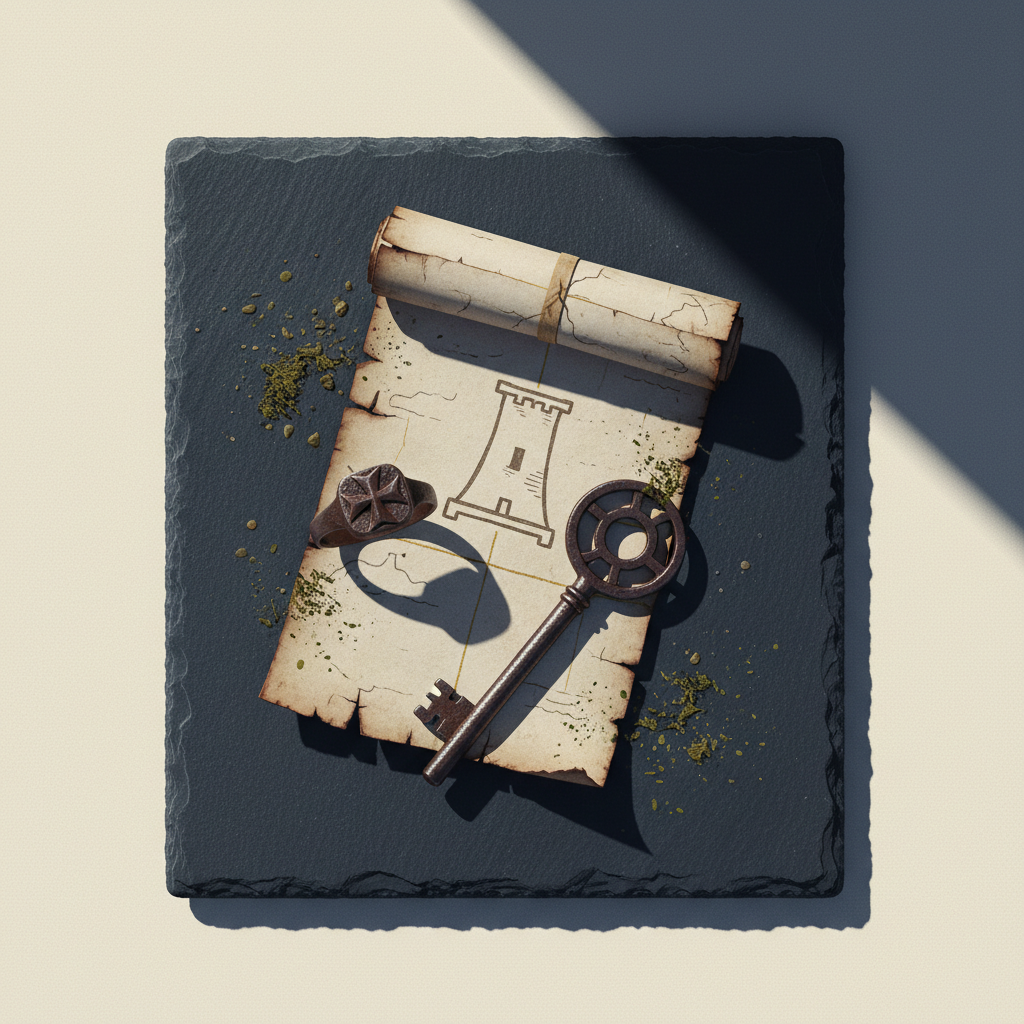
The official story of the Knights Templar is a tidy one. Founded in the 12th century, disbanded by papal decree in the early 14th, its grand master Jacques de Molay burned at the stake in Paris. A neat, violent conclusion. The textbooks close the chapter.
But systems of power and belief rarely dissolve so cleanly. Ideas are more resilient than institutions. To see the postscript to the Templar story, you don’t look in a book; you go to Sintra, Portugal, and walk the grounds of Quinta da Regaleira.
At first glance, Regaleira is a late-romantic folly, an eccentric millionaire’s fantasy of turrets, grottoes, and lush gardens. But the owner, Carvalho Monteiro, was no mere dilettante. He was a man steeped in esoteric traditions, and the estate he commissioned from the architect Luigi Manini is not a house, but a physical argument. It is a map of initiation.
Its most compelling feature is the ‘Initiation Well’. It is not a well at all, but an inverted tower plunged deep into the earth, circled by nine moss-slicked levels of a spiral staircase. Nine is a number of significance in esoteric lore, from Dante’s circles of hell to the nine spheres of the heavens. To descend is to journey into the self, a ritual of darkness before rebirth into the light.
At the bottom, a mosaic compass star—or perhaps a Templar cross—is laid into the floor. From here, a network of underground tunnels branches out. Some lead to dead ends; others emerge into the light at a different part of the garden, by a chapel or a lake. The symbolism is direct, almost instructional. It’s a process, a metaphorical journey from ignorance to enlightenment, echoing the rites of passage fundamental to orders like the Templars, the Rosicrucians, and the Freemasons who followed.
This is not an anomaly; it’s a continuation. When Pope Clement V dissolved the Templars, King Dinis of Portugal negotiated a transfer of their assets and personnel. He founded the Order of Christ, a direct successor that inherited Templar knowledge, wealth, and, most importantly, their mission. Vasco da Gama sailed under the Templar cross of the Order of Christ. The symbols didn’t die; they were simply placed on a new flag.
Regaleira, built centuries later, is a testament to the persistence of these ideas. It’s a library of stone and soil, indexing a worldview that the Vatican sought to erase. The architecture is a deliberate echo of the Templar preceptories, which were not just forts but places of spiritual learning. The estate is a working model of a hermetic universe, built by those who inherited the intellectual and spiritual legacy of the original order.
The notion that a powerful, transnational organisation could be erased overnight is a fiction for bureaucrats. Influence doesn’t vanish; it diffuses. It goes quiet, changes its name, swaps its public-facing uniform for the privacy of a fraternal lodge or the coded language of architecture. Regaleira is the proof: a story not of absence, but of deliberate, patient silence.
Powerful ideologies don’t end, they simply find new vehicles.
TL;DR
History tells us the Knights Templar were abruptly extinguished in 1312. But a sprawling estate in Sintra, with its inverted towers and Masonic tunnels, suggests a different story: not an ending, but a quiet rebranding.