There's a potato Europe and there's a tomato Europe
Europe can be divided into two distinct culinary and cultural zones: the potato half and the tomato half. These foods are not just ingredients; they are shorthand for opposing views on work, time, and life itself, born from climate and history.
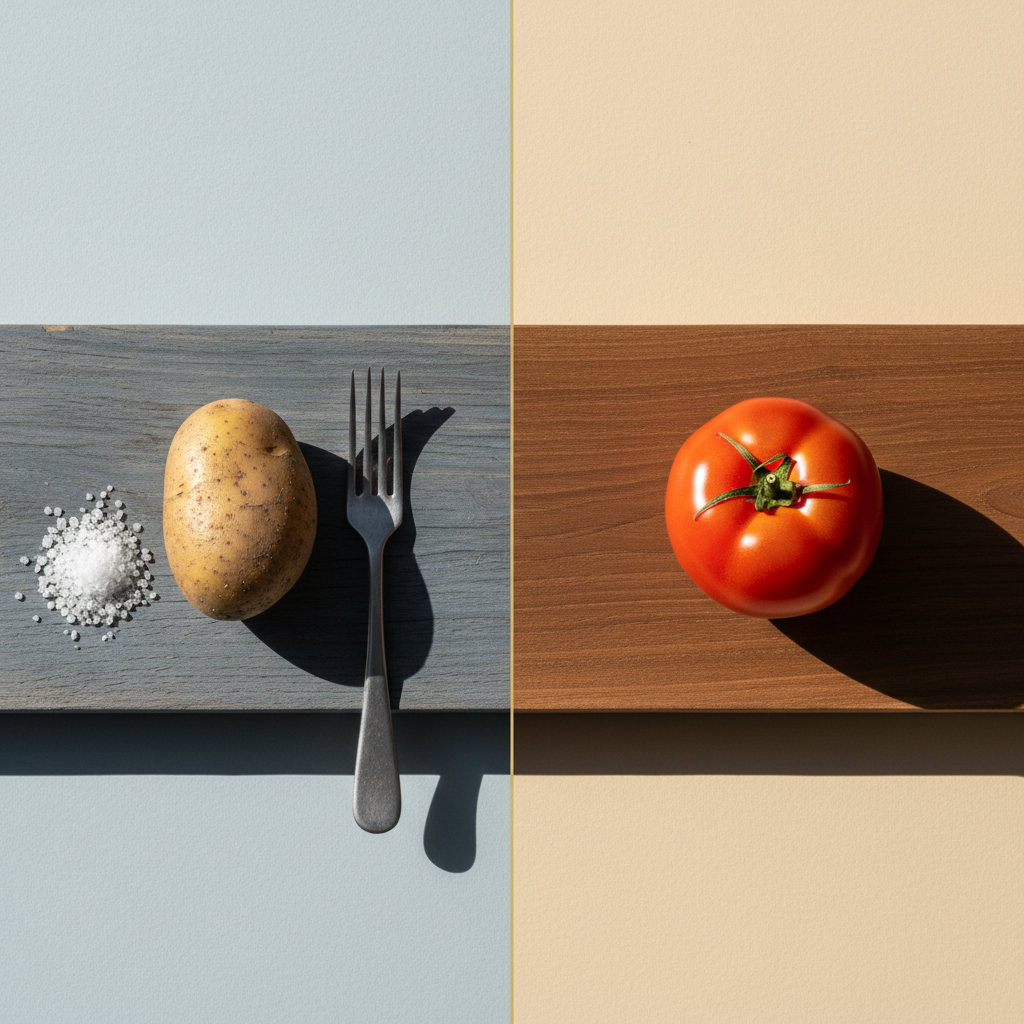
There is a potato Europe and there is a tomato Europe. This isn’t a punchline. It’s a workable theory of culture, climate, and class played out on a dinner plate. Anyone who has split their life between the continent’s north and south will recognise the dividing line. It’s the point where the olive oil runs out.
The potato is a creature of the north. It’s a dense, subterranean, reliable fuel. The potato powered the industrial revolution, pulled from the cold, damp earth to feed factory workers in Manchester, Hamburg, and Lodz. It demands little from the sun and stores through the winter. It is the tuberous logic of a people who learned to survive indoors, to whom punctuality is a virtue because the factory whistle, not the sun, dictates the day.
Life in potato Europe is structured, legible, and built around the predictable cadence of indoor work. Society is a machine, and the individual is a cog. This is often misread from the south as coldness, a lack of spontaneity, a deficit of soul. But it is not coldness; it is the cultural residue of centuries spent battling the climate and mastering the clock.
The tomato is a fruit of the sun. It is a southern, expressive, and seasonal luxury that became a staple. Life in tomato Europe moves to a different rhythm. Here, the day is shaped by the heat, the harvest, the long lunch, the siesta. The tomato arrived from the Americas and found its home in the Mediterranean, a place where life is lived outdoors, on the street, in the piazza.
Work is a part of life, not its entire organising principle. Relationships, family, and the texture of the moment often take precedence. This fluidity is consistently misinterpreted by the north as laziness, a chaotic lack of ambition, an inability to get things done on schedule. But it is not laziness; it is a different calibration of what a day, and a life, is for.
Both vegetables are colonial imports, aliens that have deeply embedded themselves into the local soil and psyche. The potato, from the Andes, became a tool of social control and a bulwark against famine for the northern working class. The tomato, also from the Americas, was first an ornamental curiosity before it became the heart of a cuisine synonymous with sun and leisure.
The tension is baked in. Potato Europe, with its protestant work ethic, saves and invests. Tomato Europe, with its Catholic acceptance of fate, spends and enjoys. One is obsessed with the future, the other with the present. The EU’s endless north-south economic debates are simply the potato half arguing with the tomato half about whose approach to life is more valid.
Neither perspective is wrong; they are just different answers to different environmental and historical questions. One culture is fuelled by calories efficiently metabolised for industrial labour, the other by a food that is inseparable from sunshine and the soil it grew in.
Before you judge a culture
TL;DR
Europe can be divided into two distinct culinary and cultural zones: the potato half and the tomato half. These foods are not just ingredients; they are shorthand for opposing views on work, time, and life itself, born from climate and history.