Where do I start? What should I care about today?
The internet presents a buffet of catastrophes, demanding you care about everything, all at once. The only sane response is to ignore most of it and start with the first thing you can physically touch.
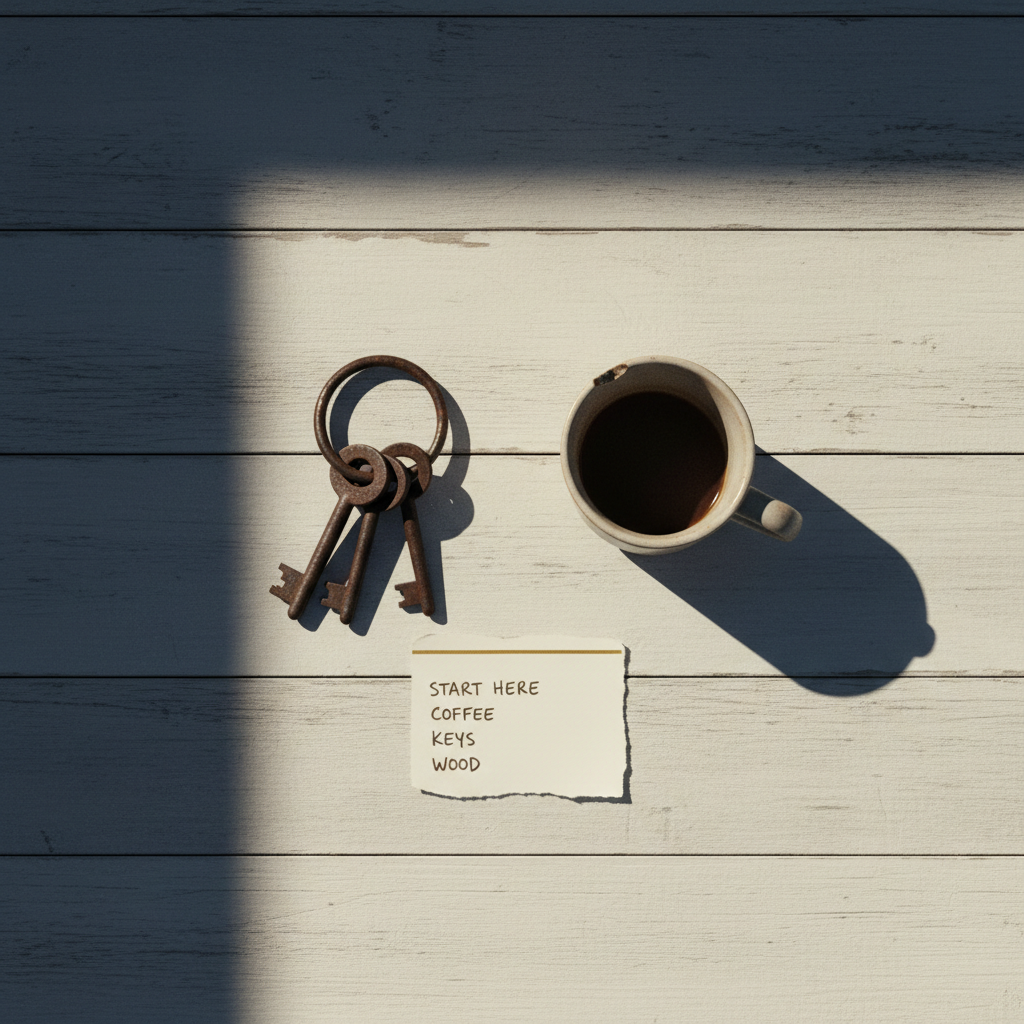
We are drowning in things to care about. The news, the feed, the endless scroll; each presents a fresh catastrophe demanding your outrage, your signature, your small donation. A humanitarian crisis in a country you couldn’t find on a map, a subtle change in corporate policy, the latest pronouncement from a politician you despise. It is a firehose of righteous causes.
The natural human response to this information overload is paralysis. When you’re told to care about everything, you end up caring about nothing. You either burn out trying to keep up, your concern spread so thinly it becomes transparent, or you build a fortress of apathy and retreat from the world entirely. Neither is a useful state of being.
The question “What should I care about today?” is a trap. It presupposes a world of infinite capacity and influence. It is the wrong question. The right question is: “What is within my power to meaningfully affect?”
And the answer to that begins with your own body.
This isn’t about wellness culture or self-optimisation. It is about a fundamental duty of stewardship over the only vehicle you have for enacting change in the world. Are you sleeping enough? Are you eating something other than processed beige food? Can you walk up a flight of stairs without getting out of breath? If you are physically a wreck, you are a liability, not an asset, to any cause you might claim to support.
Your first responsibility is to not be a burden. To be rested, fed, and capable. Before you try to save the world, make sure you’re capable of saving yourself from a minor head cold. This is the inner ring of your influence. Master it. Attend to it daily. No one else will.
Once your own house is in order–the house of your body–turn to the house you live in, and the street it sits on. One step outward. Look at the world immediately outside your front door. Is there rubbish on the pavement? Is a streetlamp broken? Are the drains blocked? Do you know the names of the people who live next to you?
This is the next locus of control. Things you can see, touch, and fix. You can’t negotiate a ceasefire on the other side of the planet. You can pick up the empty crisp packet outside your gate. You can report the flickering light to the council. You can say hello to your neighbour and ask them how they’re doing.
These actions feel small. They feel insignificant compared to the grand theatre of global politics. They are not. They are real. They have an immediate, tangible effect on your lived environment and the lives of those around you. They replace abstract anxiety with concrete action. They build social trust, one small interaction at a time. A community where people pick up litter and know their neighbours is a community that is more resilient, more capable, and fundamentally more pleasant to live in.
Engaging with global issues from a position of local neglect is pure performance. It is a way to feel important and righteous without doing any of the difficult, unglamorous work of citizenship. It mistakes retweeting an article for reading it, and reading it for understanding it, and understanding it for being able to do a single thing about it. It’s a distraction.
True influence is built concentrically. From the body, to the home, to the street, to the neighbourhood, to the town. By the time your influence reaches the level of national or global politics, it will be rooted in the legitimacy of a thousand small, tangible acts of stewardship. You will have earned it.
The world is changed not by those who worry about it, but by those who attend to their small part of it.
TL;DR
The internet presents a buffet of catastrophes, demanding you care about everything, all at once. The only sane response is to ignore most of it and start with the first thing you can physically touch.