Why does it matter — a series on the empathy of extrapolation
What happens to a stranger 6,000km away lands in your body, and in your kitchen. In a new series, we trace the threads of global events back to our daily lives, starting with the Red Sea blockade and your morning coffee.
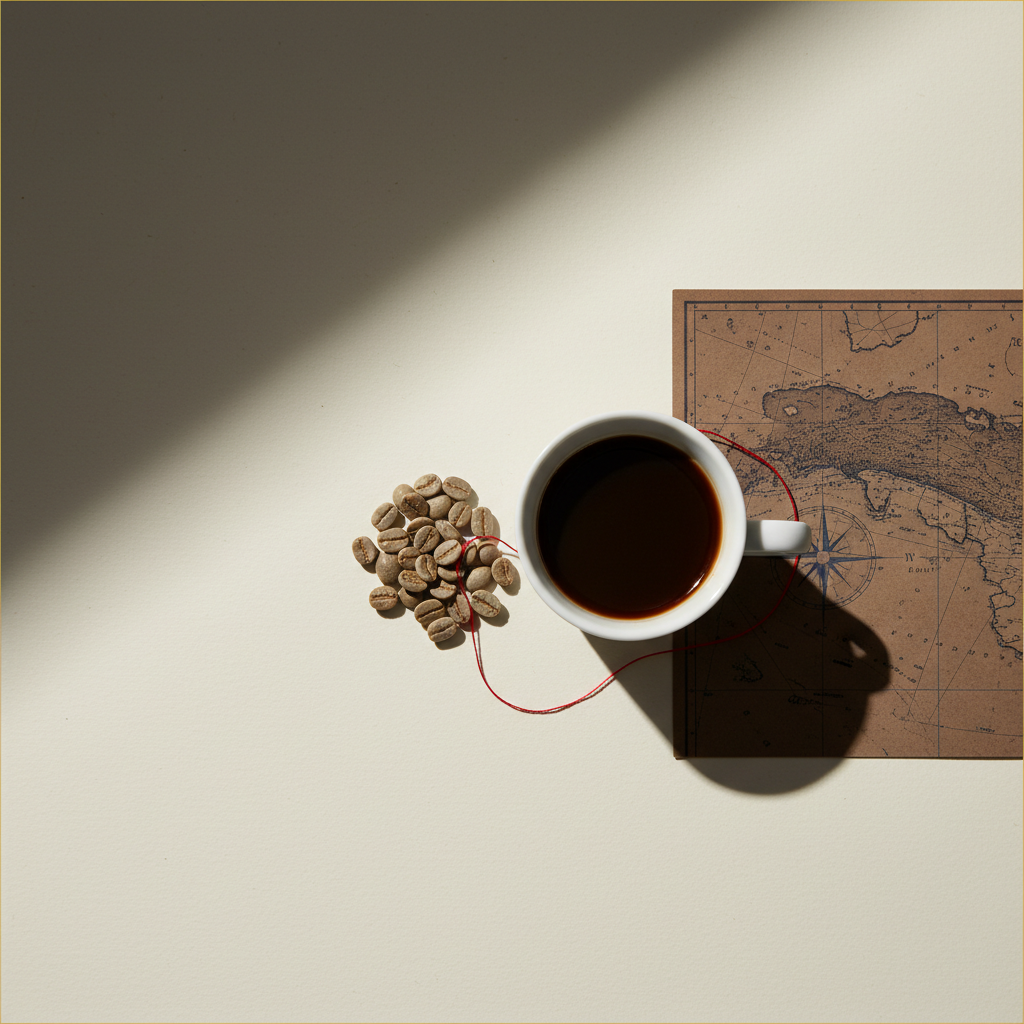
The news feels like a constant stream of distant horror. A bombing, a drought, a coup. You read about it, you might feel a pang of something – sadness, anger, morbid curiosity – and then you move on. But sometimes, an event sticks. It has a texture. It feels less like information and more like a premonition. Why is that? Why does what’s happening in a country you can’t find on a map seem to land in your own body?
It’s the empathy of extrapolation. It’s an instinctive, often unconscious, act of systems thinking. We are pattern-matching animals. We trace lines. When we hear about a flood in a major agricultural region, we don’t just sympathise with the abstract farmer. We extrapolate. We trace the line from the flooded field, to the failed harvest, to the global commodity market, to the shelf in our local supermarket, to the price of a loaf of bread. A distant event begins its journey toward our own kitchen table.
This is a series about that journey. In each post, I’ll take one political or environmental event from a long way away, and trace its path. No hand-waving about a ‘globalised world’. Just a clear, unromantic line of cause and effect, from a headline to your home.
Let’s start with the recent attacks on shipping in the Red Sea. A well-armed militia in Yemen starts firing missiles at container ships. On the surface, it’s a localised geopolitical crisis. A problem for mariners and their insurers. But the Red Sea is not just a body of water. It is the artery through which 12% of global trade flows, via the Suez Canal.
Faced with the risk, the world’s largest shipping conglomerates – the ones who move everything, for everyone – reroute their vessels. They stop using the Suez Canal and instead take the long way around Africa, via the Cape of Good Hope. A journey that was once a straight line is now a huge, looping detour.
This adds ten to fourteen days to the transit time between Asia and Europe. A two-week delay might not sound like much. But it introduces enormous cost and colossal inefficiency into a system engineered for just-in-time perfection. The ship needs more fuel, at hundreds of thousands of pounds per day. The crew are paid for longer. Insurance premiums spike. The containers themselves, which are needed back at a port in China to be refilled, are now in the wrong place at the wrong time. The finely-tuned choreography of global logistics falls apart.
And here is the link to your kitchen. A huge portion of the world’s robusta coffee beans, the kind used for your instant coffee, are grown in Vietnam. They are packed into containers and shipped to Europe for roasting and packaging. That journey used to go through the Suez Canal. Now it goes the long way around.
The cost of shipping that single container of coffee beans has quadrupled. Roasters in Europe, who operate on thin margins, absorb this for a while. They use their buffer stock. But eventually, the delayed, more expensive beans arrive. That cost must be passed on. The price of your jar of Nescafé goes up. The new phone you ordered is delayed. The components for the car you’re waiting for are sitting in a queue of ships off the coast of Rotterdam.
The point isn’t simply that things become more expensive. It’s the revelation of the system itself. The intricate, fragile, and entirely man-made web that delivers your world is exposed. The feeling you get when you read about those attacks isn’t just sympathy; it’s a recognition. You are sensing a tremor in the web.
A missile fired in the Bab-el-Mandeb strait doesn’t just travel a few hundred kilometres; it lands, weeks later, on your supermarket shelf B24 of your local Tesco.
TL;DR
What happens to a stranger 6,000km away lands in your body, and in your kitchen. In a new series, we trace the threads of global events back to our daily lives, starting with the Red Sea blockade and your morning coffee.