Persia, Samarkand and Delhi: the conversation history forgot to show us
Before colonial borders severed the East, an unbroken cultural highway ran from Isfahan through Samarkand to Delhi. It was a millennium-long conversation in architecture, trade, and verse—and far more sophisticated than modern maps allow.
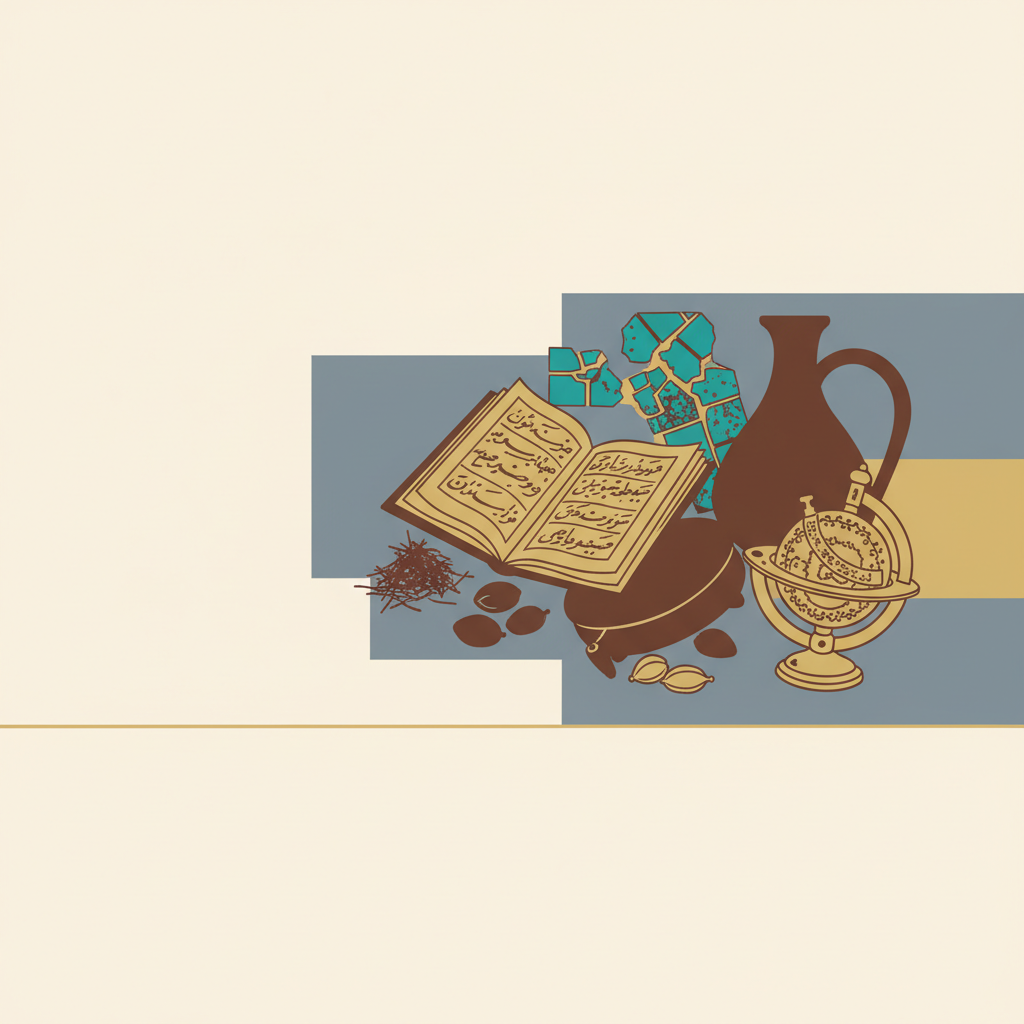
We have inherited a flat map of the past. It runs east to west, drawn largely by the British coloniser, who needed us to believe that civilisation was a relay race ending in London. In that telling, the East is fragmented: insular empires sitting behind fortress walls, waiting to be categorised.
The reality was far messier, far more dynamic, and infinitely more stylish.
For nearly a millennium, an unbroken cultural highway ran from Isfahan through Samarkand down to Delhi. It was not held together by a single centralised army, but by a shared aesthetic and administrative vernacular: the Persianate world. If you were an architect, an accountant, a calligrapher, or an itinerant Sufi mystic, your world did not end at the Hindu Kush. It began there.
Consider the language itself. Persian was not merely the dialect of modern-day Iran; it was the operating system of Eurasia. A diplomat from the Ottoman borders could arrive at the Mughal court in Agra, bypass any local interpreter, and trade rhymed couplets with the Grand Vizier. They shared the same classical canon: Ferdowsi’s heroic epics, Nizami’s romances, Saadi’s pragmatism. It was the lingua franca of manners, statecraft, and high finance across thousands of miles.
The modern nation-state taught us to see borders; the medieval world saw networks of taste, verse, and patronage.
This was not passive cultural drift. It was deliberate human capital flight. When political fortunes turned sour in Herat or Tabriz, painters and master builders simply packed their tools and took the caravan trails south. They were welcomed with open coffers. When Humayun returned to India from his exile in Safavid Persia, he did not just bring back an army; he brought Mir Sayyid Ali and Abd al-Samad, two of the finest artists of the Persian royal atelier.
The collision of those Persian miniatures with the bolder, earthier traditions of local Indian painters gave birth to the Mughal school. It was an intellectual joint venture. You can see the synthesis stamped into stone: the soaring ribbed domes of Timurid Samarkand reimagined in red sandstone and white marble along the Yamuna.
The trade was never one-way. India poured its wealth, textiles, and philosophical texts back upstream. Sanskrit classics like the Mahabharata were rendered into ornate Persian as the Razmnama, studied with intellectual curiosity by Muslim courtiers who fancied themselves scholars as much as statesmen.
Then came the mystics. The Chishti, Naqshbandi, and Suhrawardi Sufi networks formed an invisible nervous system across Central and South Asia. Monasteries and shrines doubled as diplomatic waystations, publishing houses, and community kitchens. Amir Khusrau, writing in Delhi under the patronage of the Sultanate, was playing with Persian metres while listening to northern Indian folk rhythms, laying the foundational grammar of Hindustani classical music and qawwali.
To reduce this continuum to our modern definitions of nationality or sectarian divide is to misunderstand how sophisticated these courts actually were.
The craftsmen, too, spoke a common grammar. The tilework of the Registan in Samarkand, the intricate lapidary inlay of Isfahan’s mosques, and the pietra dura of the Red Fort in Delhi are variations on a single civilisational design system. The geometry belongs to the same mathematics; the blue of the lapis came from the same Badakhshan mines.
We rarely romanticise this dialogue because it resists our modern appetite for clean binaries. It was a world that accommodated fierce military rivalry alongside deep aesthetic reverence. Babur could despise his Uzbek rivals while pining endlessly for the melons of Fergana and the garden architecture of Samarkand. He carried that memory into Hindustan, laying out charbagh gardens in the dust of the northern plains, forcing the landscape to remember the north.
When the British coloniser dismantled this fabric in the nineteenth century—stripping Persian of its official status in India in the 1830s, slicing up borders, carving out spheres of influence—they did not just change administrations. They severed a thousand-year-old conversation.
We were left with isolated modern states, amnesiac about the shared vocabulary that once made a courtier from Bukhara feel entirely at home in the alleys of Shahjahanabad.
TL;DR
Long before modern borders, a sophisticated Persianate network bound Iran, Central Asia, and India into a single cultural continuum. Through shared administrative language, itinerant craftsmen, and dynamic courts, Samarkand and Delhi traded aesthetics as fluently as coin. It was a singular civilisational conversation, forgotten only because modern borders demanded its erasure.