Recycled Clothes Should Not Cost Workers Their Limbs
In Panipat, dangerous textile recycling machinery is leaving workers with life-changing injuries. Any claim to sustainability should have to answer for the conditions in which the work gets done.
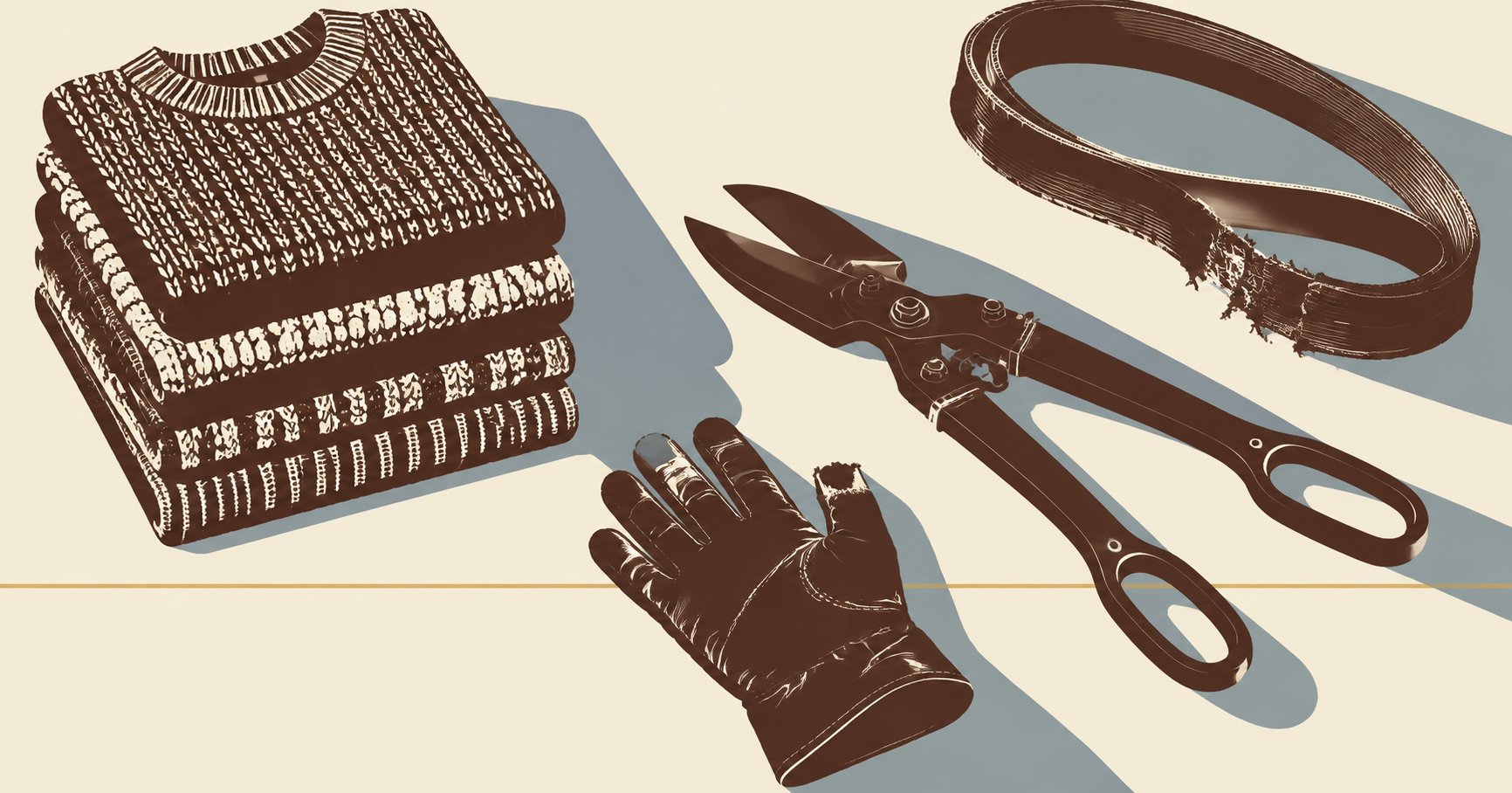
A recycling label tells you remarkably little about the person who did the recycling. That is a serious omission when the work involves feeding discarded clothes into machinery capable of causing life-changing injuries.
The Guardian’s supplied report summary describes textile recycling in Panipat, India, where used clothing becomes products for global brands. It identifies dangerous machinery and few safeguards, and says life-changing injuries are common. Its headline describes workers losing hands or legs.
That should make us considerably more demanding about what qualifies as a sustainable product. Keeping fabric in circulation is a worthwhile objective. It cannot settle the question of whether the process deserves approval.
What the label leaves out
My objection is to an accounting system that could register recovered material as a success while treating an injured worker as somebody else’s problem. A product should not earn its environmental credentials through a process whose human costs remain outside the assessment.
The supplied summary does not identify the brands buying these products, establish what they knew or explain the contractual arrangements. It would be irresponsible to invent those details. There is still enough here to ask a precise question. What should a buyer have to establish about workplace safety before selling the environmental merits of recycled goods?
My answer is considerably more than the origin of the fibre.
A claim about responsible production should require evidence about the production itself. If a company wants credit for using recycled textiles, it should be prepared to account for the conditions under which those textiles were processed. Otherwise, the claim is narrower than the virtue attached to it.
A recycling label should never be permission to stop asking how something was made.
This matters because the word recycled can do a great deal of persuasive work. It offers a simple reason to feel better about a purchase. The actual standard needs to be harder to satisfy than that feeling.
Put safety into the purchasing decision
The useful response is to make safe production a condition of doing business. Appeals to corporate concern are insufficient unless they change what buyers require and what they are willing to fund.
For a buyer, that should mean asking whether machinery has effective safeguards and whether workers can stop dangerous work without risking their livelihood. Evidence should matter more than a supplier’s assurances. Where safety cannot be established, a purchase should not proceed on the strength of recycled content alone.
These are proposed requirements, not findings about particular companies in Panipat. The distinction matters. The report summary supports concern about machinery and safeguards; it does not support a verdict on every buyer or factory.
Purchasing terms also deserve scrutiny. If meeting a safety requirement raises the cost of production, the buyer should be willing to pay for it. Requiring an improvement while refusing any corresponding change in price would be a convenient way to demand responsibility without accepting any.
That is where an ethical commitment becomes testable. A company should be judged by the orders it places and the conditions it accepts, rather than by how sympathetically it describes the problem.
Workers need authority over danger
Inspection has an obvious place here. So does the ability of workers to raise concerns and refuse unsafe tasks. Neither should depend entirely on the goodwill of the organisation whose production might be interrupted.
I would judge a safety system partly by a simple test. Can the person nearest the machine get a dangerous practice stopped? A process that produces paperwork while leaving that person powerless is a poor answer to the problem described in Panipat.
After an injury, medical care and financial support should be obligations. They should never become substitutes for preventing the next injury. Compensation cannot make the original working conditions acceptable, however efficiently it is administered.
The person nearest the machine should have power over whether it keeps running.
Governments should set and enforce meaningful safety requirements. Buyers should make safe conditions part of procurement. Giving each a defined responsibility is more useful than invoking a general duty that everyone can agree with and nobody has to fulfil.
A more demanding environmental standard
None of this requires abandoning textile recycling. It requires refusing to accept recovered material as sufficient evidence of responsible production.
The alternatives should not be presented as dangerous recycling or no recycling at all. The proper demand is for recycling carried out under safe conditions, with its costs reflected in what buyers pay. If a business model cannot accommodate those costs, its claim to responsibility deserves challenge.
The Panipat report concerns people doing useful work under conditions the supplied summary describes as dangerous. We should resist converting their injuries into a vague lesson about conscious consumption. The practical questions concern machinery safeguards and who has the authority to insist on them.
Recycling deserves support when the work is safe. Until worker safety is part of the standard, a recycled-content claim remains an incomplete account of how a product was made.
TL;DR
The Guardian’s report summary describes common life-changing injuries in Panipat’s textile recycling industry, which produces goods for global brands. Buyers and regulators should make safe machinery and workers’ authority to stop dangerous work enforceable requirements. Recycled content alone cannot establish responsible production.