The house of misshapen boxes — why we're desperate to pick a side
We are all pressured to pick a side, assembling our beliefs from borrowed opinions. A wobbly house of misshapen boxes is no substitute for a worldview built by the hard work of your own thinking.
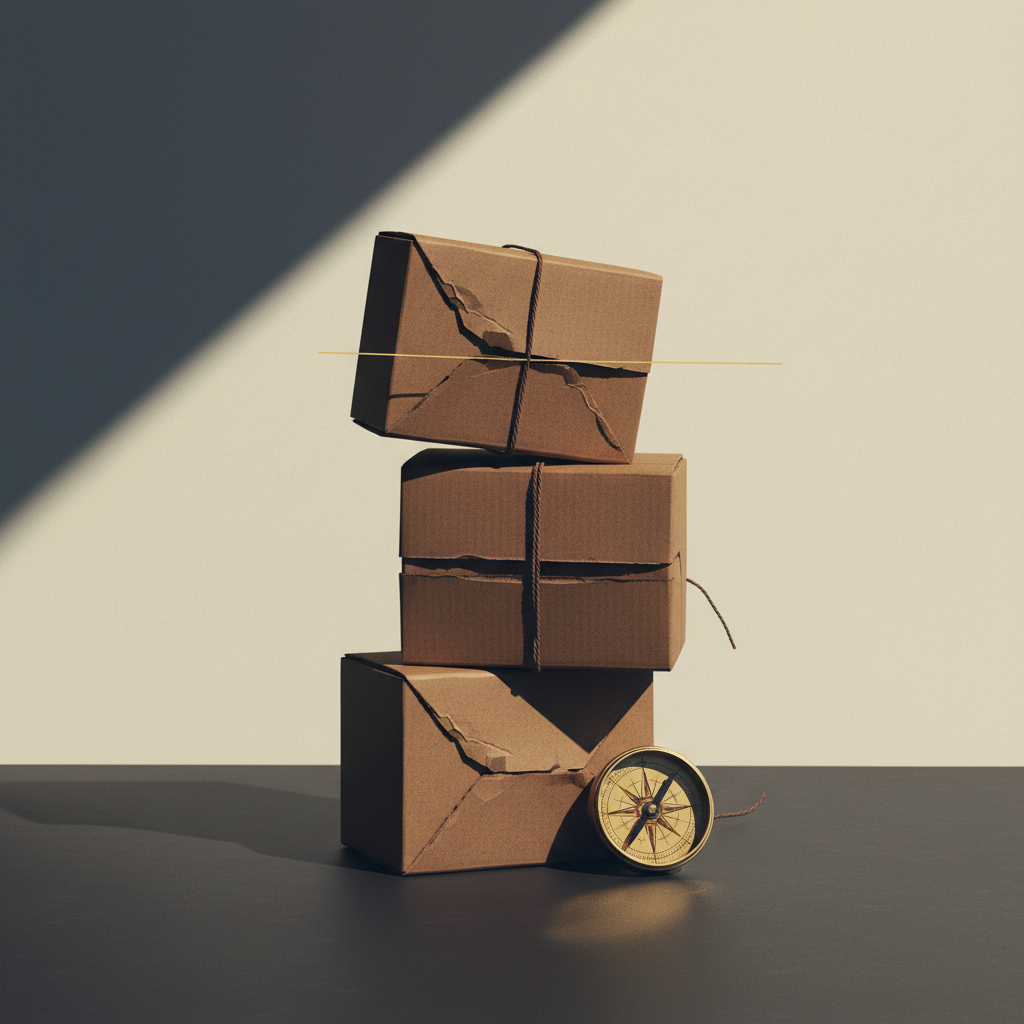
We live in a house of misshapen boxes. Each box is an opinion, a viewpoint, a take. We get one from a podcast, another from a persuasive thread online, a third from the only political party that doesn’t seem entirely contemptible. We collect them, stack them, and call the resulting pile our identity.
The problem is, the boxes don’t fit. They were never designed to. The one you borrowed from a free-market evangelist sits awkwardly atop another you inherited from a social justice activist. The resulting structure is crooked, unstable, and requires constant, exhausting maintenance to stop it from collapsing.
This is the intellectual architecture of the chronically online. It is a desperate pantomime of conviction, held together by force of will. We feel an immense pressure to have a fully-formed opinion on everything, right now. To pick a side. This is because we are tribal creatures, and in a digitally-accelerated world, the tribes are always recruiting. They offer belonging, certainty, and a simple framework for a complex world: us versus them.
It is far easier to import a pre-packaged set of beliefs than it is to build your own from first principles. The latter is slow, solitary, and deeply uncomfortable work. It offers no easy dopamine hits of group validation. It involves admitting ‘I don’t know’ — three words that have become almost unsayable in public discourse.
So we take the shortcut. We outsource our thinking to the loudest, most confident voices. We build our crooked house and then spend our days defending it, not because we are sure of its foundations, but because we are terrified of what might happen if it falls. We mistake the frantic energy of defence for the quiet confidence of genuine belief.
The alternative is not to find a better set of boxes. It is to abandon the construction project altogether. The alternative is to develop the capacity to hold two seemingly contradictory ideas in your mind at the same time, and to resist the urge for a premature conclusion.
For example: a policy can be both well-intentioned and ultimately harmful. An organisation can be mission-driven and also flawed in its execution. A person you admire can have opinions you find troubling. These are not contradictions to be resolved; they are paradoxes to be managed. This is the texture of reality. Sitting with this discomfort, refusing to collapse the tension into a simple good/bad binary, is where true thinking begins.
This is not a call for indecision or apathy. It is a call for a more robust and honest engagement with the world. It means doing the reading. It means listening to the intelligent arguments of those you disagree with, not to find holes, but to genuinely understand. It means building your own mental models, piece by piece, from the raw material of your own direct experience and critical thought.
True conviction isn’t found in a camp; it’s forged in the quiet, uncomfortable space between two competing ideas.
TL;DR
We are all pressured to pick a side, assembling our beliefs from borrowed opinions. A wobbly house of misshapen boxes is no substitute for a worldview built by the hard work of your own thinking.